
Blog
Journal
Store-running guides, product notes and engineering writing from the team behind Nudova.

The proof-of-concept line item: budgeting a one-use-case Nudova trial on a spare VPS
Price a small, scoped Nudova trial as a visible line item, run it on a clean VPS against one real client use case, and hand the client a scorecard and decision memo before the shortlist is final.

The missing second environment: what your self-hosted TCO left out
Most self-hosted TCO models price one production server and stop. Here is how to cost the staging, QA and upgrade-rehearsal environment over 3 to 5 years, and how to write down who owns it.

The training line in your platform quote: what you need to run the admin after handover
Quotes list licence, hosting, implementation and integrations. Training needs its own line too. Here is how to turn your first-week tasks into a training line, a practice session and acceptance criteria.

The local checkout rails audit: run it before you shortlist a commerce platform
In Bangladesh, checkout is phone OTP, cash on delivery, mobile wallets and a courier consignment, not a card form. Here is how to verify those rails, find out who maintains them, and make the vendor prove them in a demo before the shortlist exists.

The module switch-on list: which Nudova domains to licence before go-live
Every Nudova domain you switch on is a weekly routine someone has to own. Use one shared worksheet to decide which domains are must-have, nice-to-have or off.

The data-access audit: 5 tests for what your client can export, inspect, restore and keep
'You own everything' is shorthand, not a test. This audit turns it into 5 pass/fail checks you can run in a demo room with the store owner, each tied to the contract line it justifies.

Three cells in the hosted-versus-self-hosted table that are wrong by default
The comparison table says 'unlimited scalability', 'lower long-term costs' and 'full data control'. Each is true only under a condition the table leaves out. This piece writes out each condition and gives you 3 questions to answer before you quote any cell.
The first 90 days after a 30-minute install: an operating calendar for a self-hosted Nudova store
Setup is the short part. Patching, backups, monitoring and customer-data duties arrive on a schedule afterwards. Here is a week-by-week calendar, with a plain-language question for every item.

The biggest trading day test: what a peak sales day demands from a hosted versus self-hosted store
A one-page peak-day sheet turns hosted versus self-hosted into a costed position, with a date and an owner attached to every answer.
The clean-VPS rebuild test: 3 provisioning questions to ask before you budget a self-hosted Nudova deployment
Before VPS spend or glue-code hours go into a client estimate, test the deployment path itself. Three questions, three possible answers each, and what every answer does to your scope and handover risk.

The feature-checklist trap: weigh customer experience and ecosystem fit before you compare platforms
A longer matrix does not make a better recommendation. Here is a short three-lens workshop agencies can run before any platform shortlist, and a one-page output that keeps the decision defensible.

The per-order fee line: model commission against a licence before you recommend a platform
A headline price tells a client where a contract starts. A per-order commission is a cost that moves with every sale. This is a working breakeven model for agencies, built on the client's own margin, order volume and growth plan.
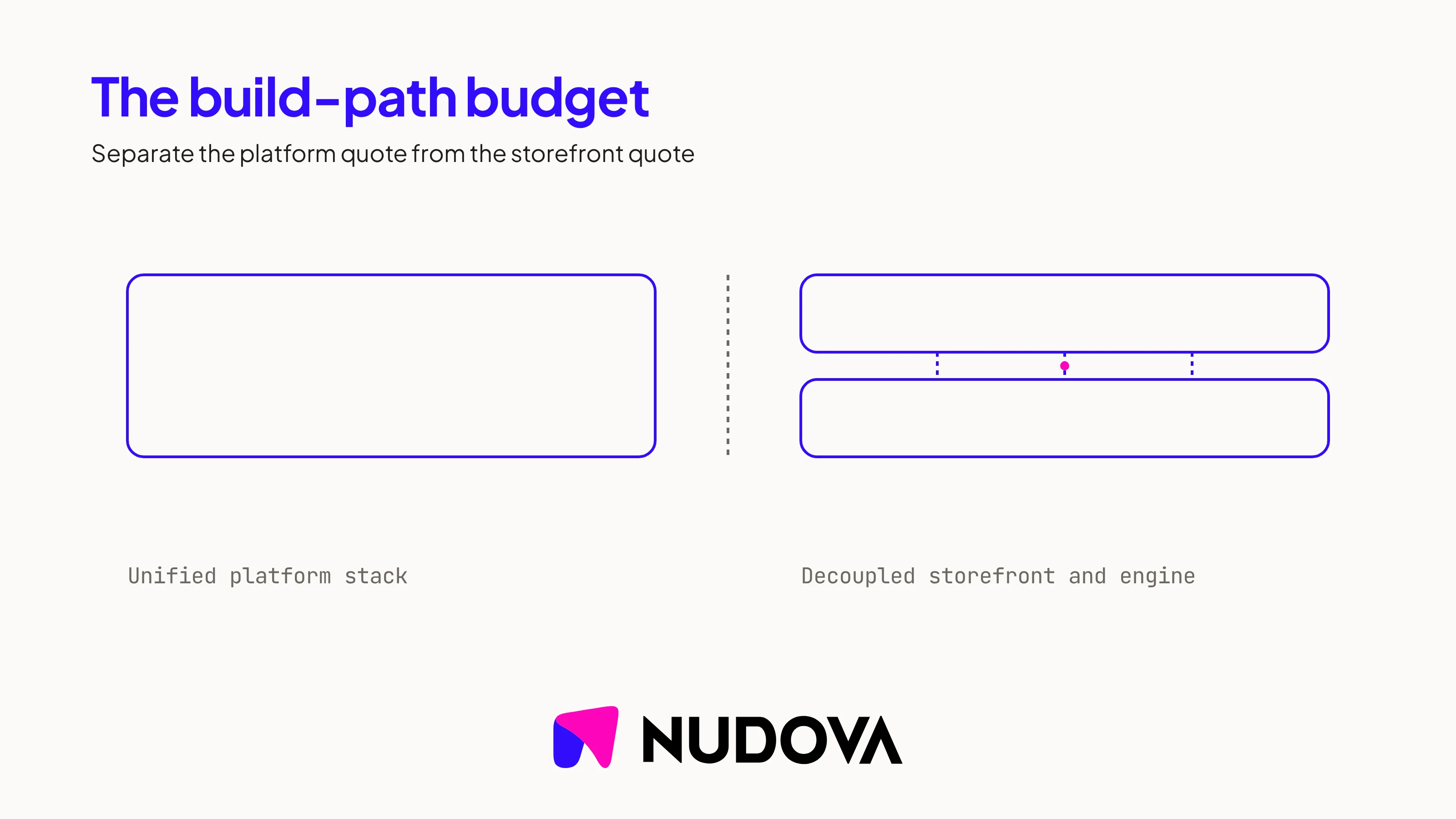
The build-path budget: price the storefront before you compare commerce platforms
Most platform cost comparisons blur two decisions: which platform to license and which storefront path to fund. A one-page build-path budget separates them, so any recommendation, including Nudova, can be judged on fit and total cost.
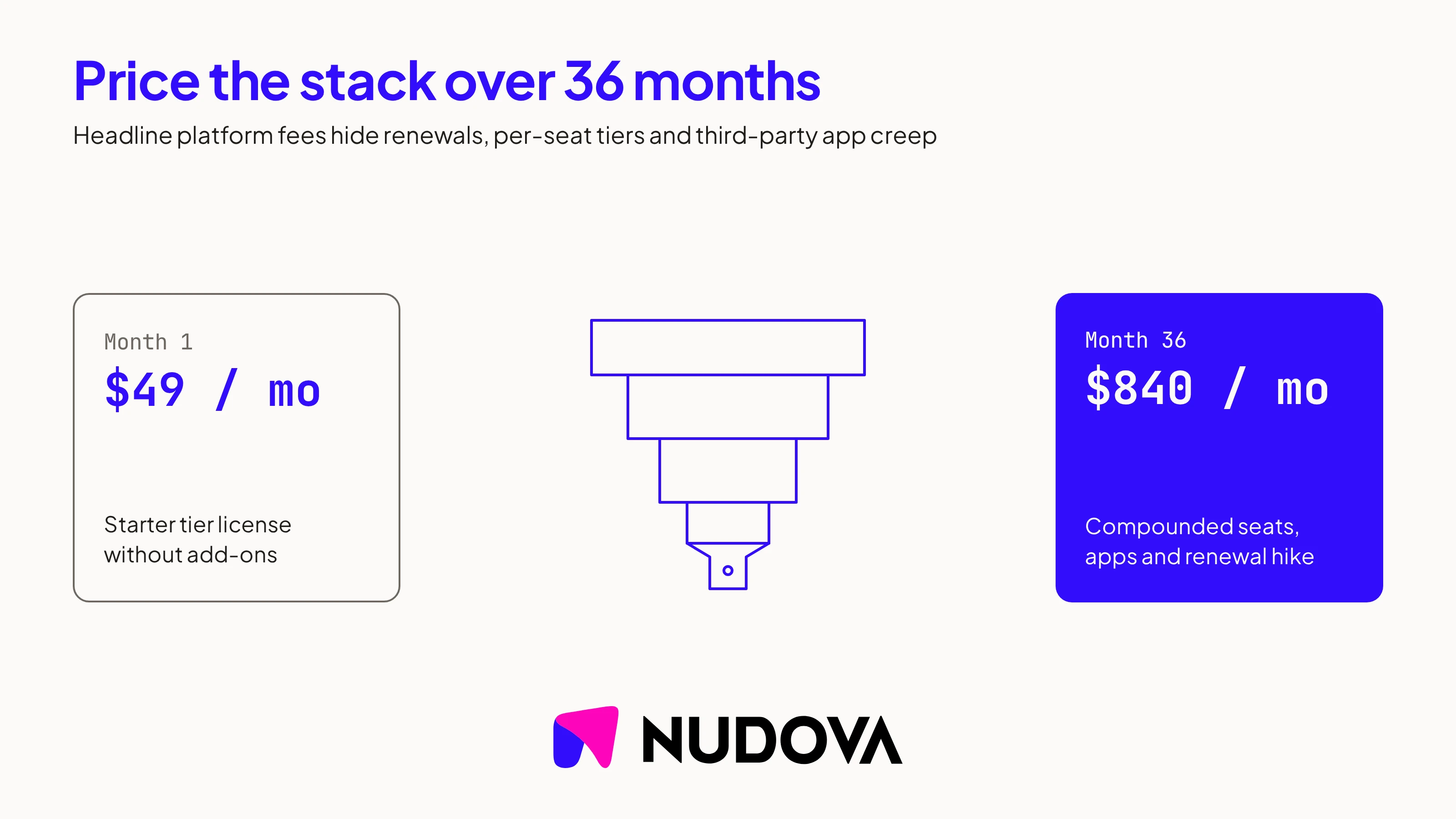
The add-on subscription creep audit: price the stack over 36 months before you recommend it
Headline platform fees hide add-ons, per-seat charges and renewal increases. This 4-pass audit turns every recurring line into a 36-month figure and tests it against a one-off alternative before the proposal goes out.
The customization ceiling test: five client requests that decide hosted or self-hosted
Run five client requests against a platform before the demo. Each one gets a verdict, a surface and an owner, so the ceiling shows up in your notes instead of in front of the client.
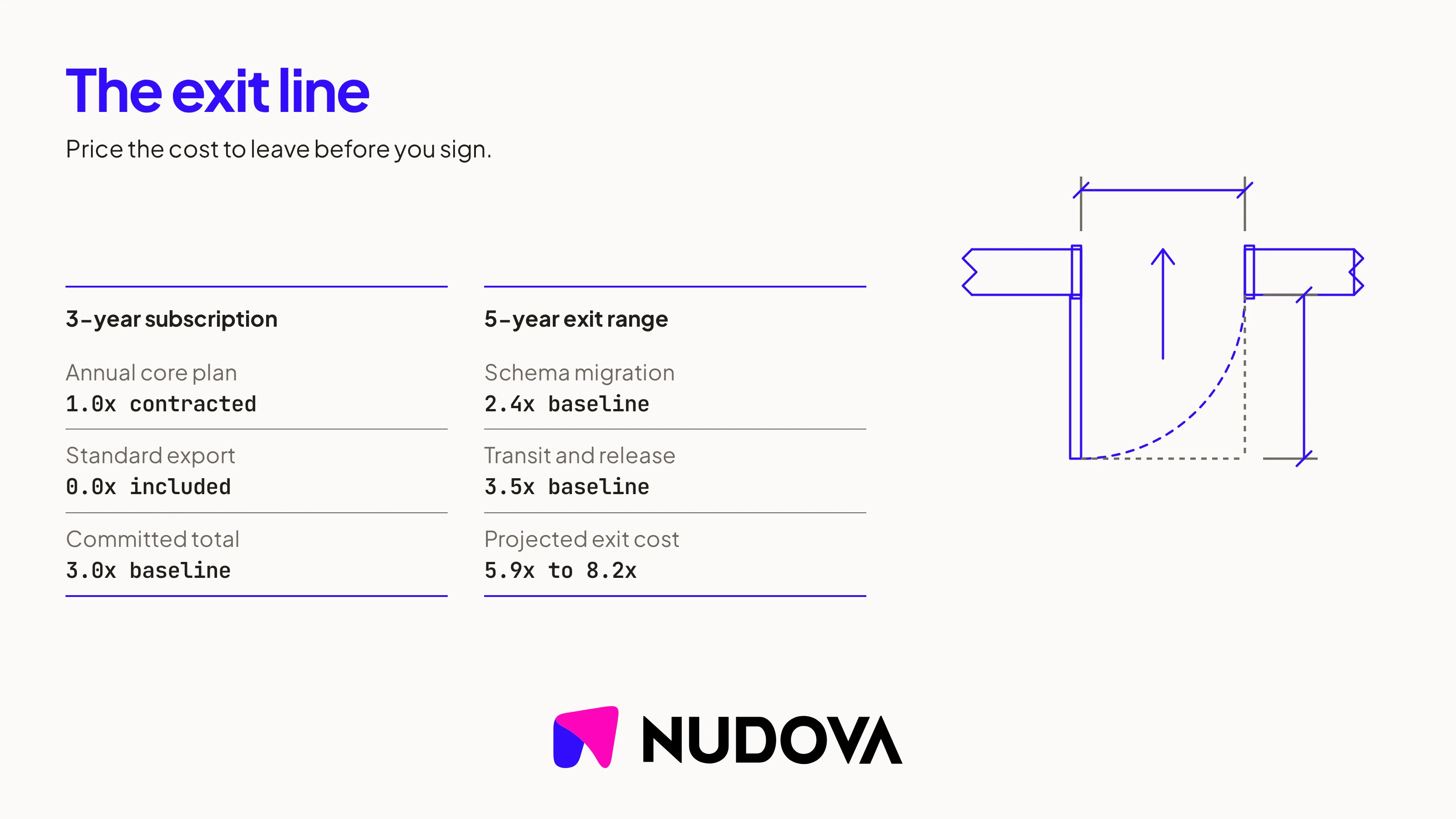
The exit line: how to price what it costs a client to leave a platform before you recommend one
A 3-year TCO model is too short to capture the cost of leaving a platform. Here is how to build the exit line as a defensible range and print it next to the subscription fee.
The sophistication trap: what to say when a client asks to self-host because it sounds more credible
A client says self-hosted sounds more credible. Here is a plain-language script, a three-question gate and a spoken cost line that help you separate a business case from a status signal before it becomes a scoped build.
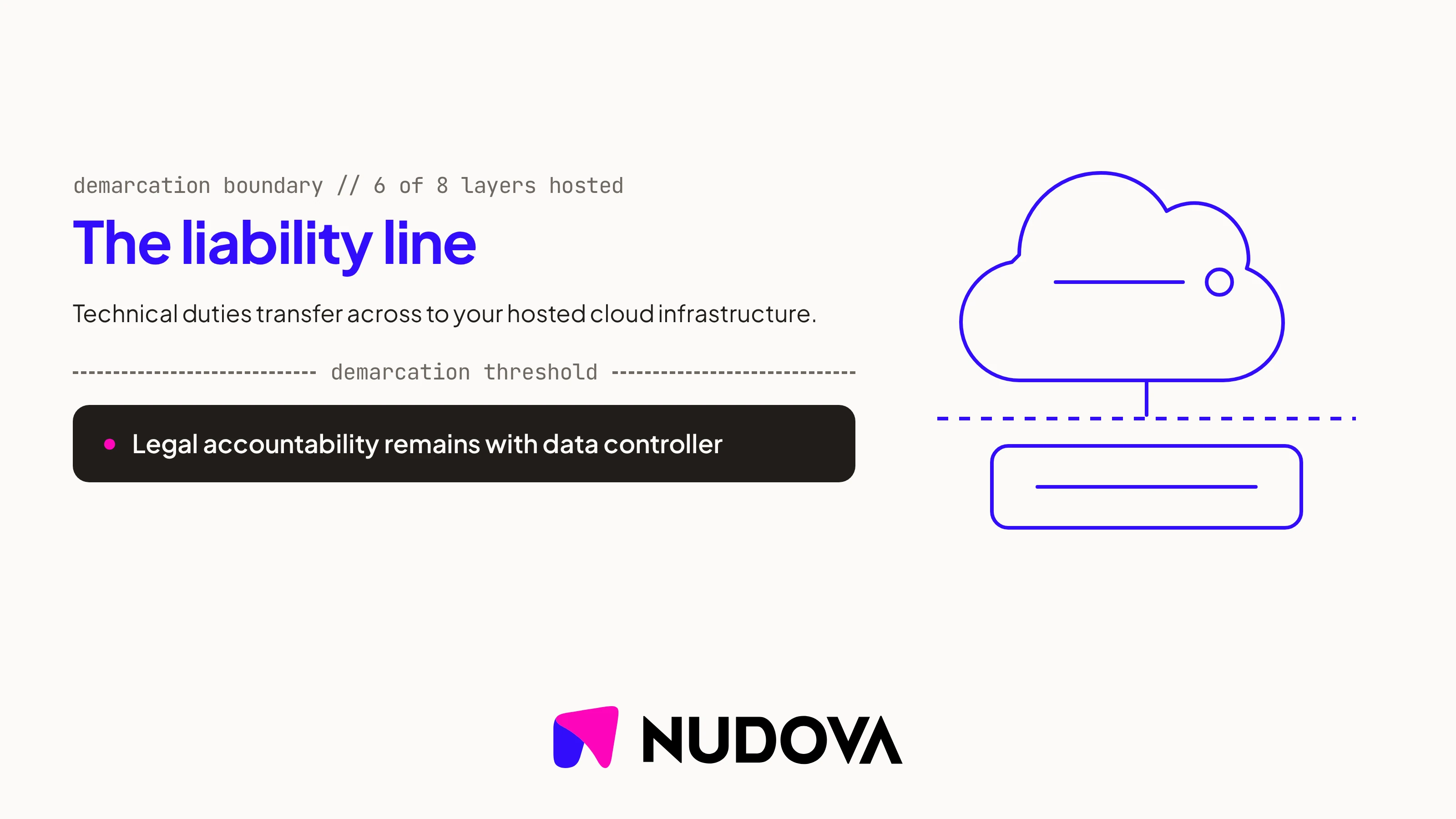
The compliance liability line: who owns PCI, GDPR and security testing when you recommend hosted or self-hosted
A hosted platform absorbs duties, not liability. Here is how GDPR, MFA, source-code testing and PCI scope divide under each architecture, and a one-page note to attach before you recommend either.
The duty column: who does each maintenance task, written down before the client signs
Hosted versus self-hosted is usually argued as control. This article asks a different question: who does the work? Here is a one-page duty column to attach to your platform recommendation, with a named owner for every row, including 'nobody'.
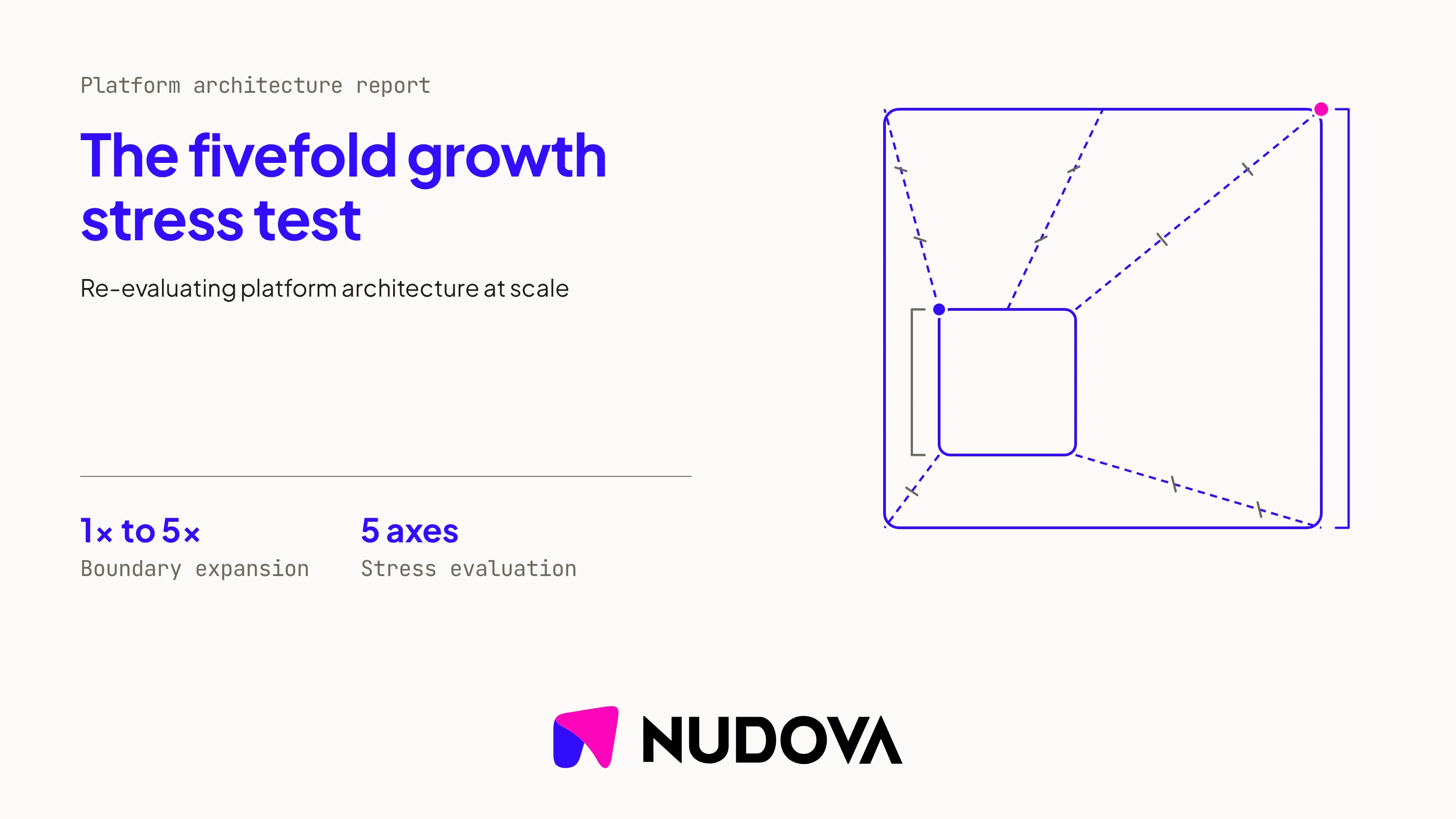
The fivefold growth stress test: a one-page exercise for re-checking a platform recommendation
This one-page grid re-runs your platform recommendation at 5x revenue, traffic, SKU count, storefronts and sellers, and shows who owns the new work before you sign.
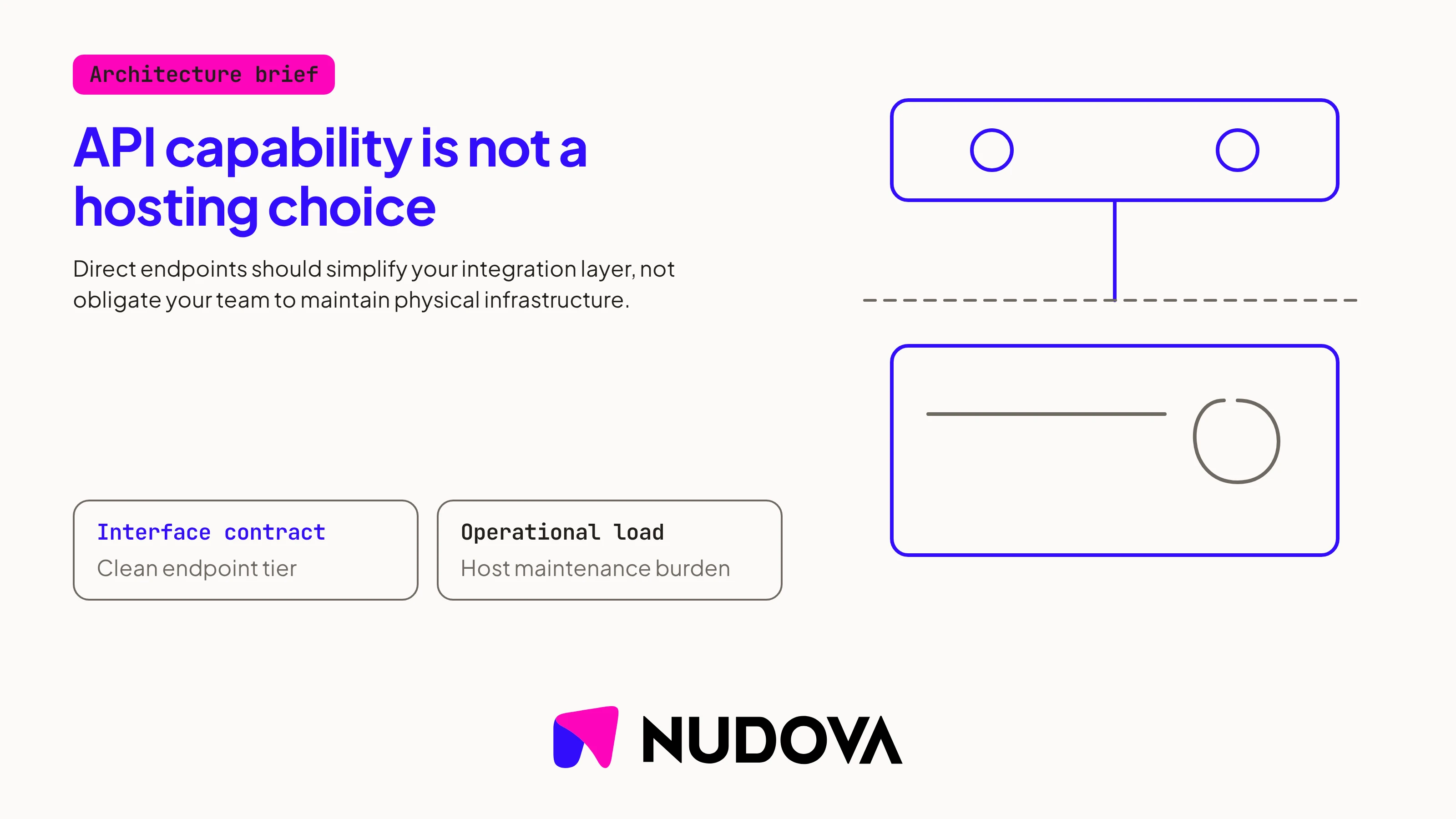
The integration surface audit: what to check before 'API-first' becomes 'self-host'
'API-first' and 'self-host' are both claims to test. This 5-step audit checks the client's real integration footprint and ties the recommendation to operating load instead of a feature label.
The fork test: three questions that show whether a commerce platform makes your agency the maintainer
A short scoping-call method for agencies: ask about upgrade cost, patch path, and client-run deployment, then read the answers as evidence of who will carry release maintenance after launch.
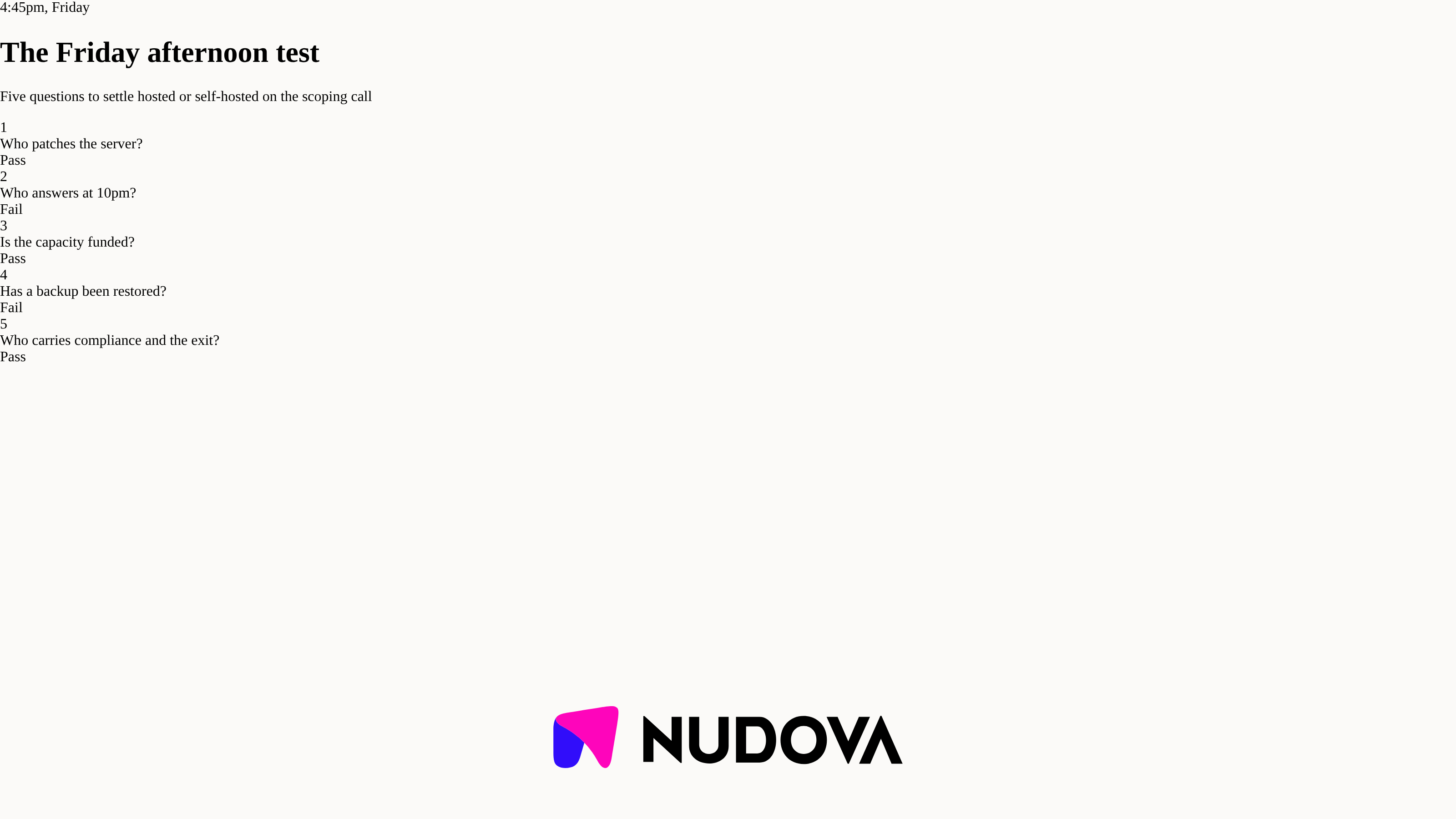
The Friday afternoon test: five questions agencies should ask before recommending hosted or self-hosted
Hosted versus self-hosted is a question about who carries operational responsibility. Five pass/fail questions let your agency settle it on a scoping call, before any platform makes the shortlist.
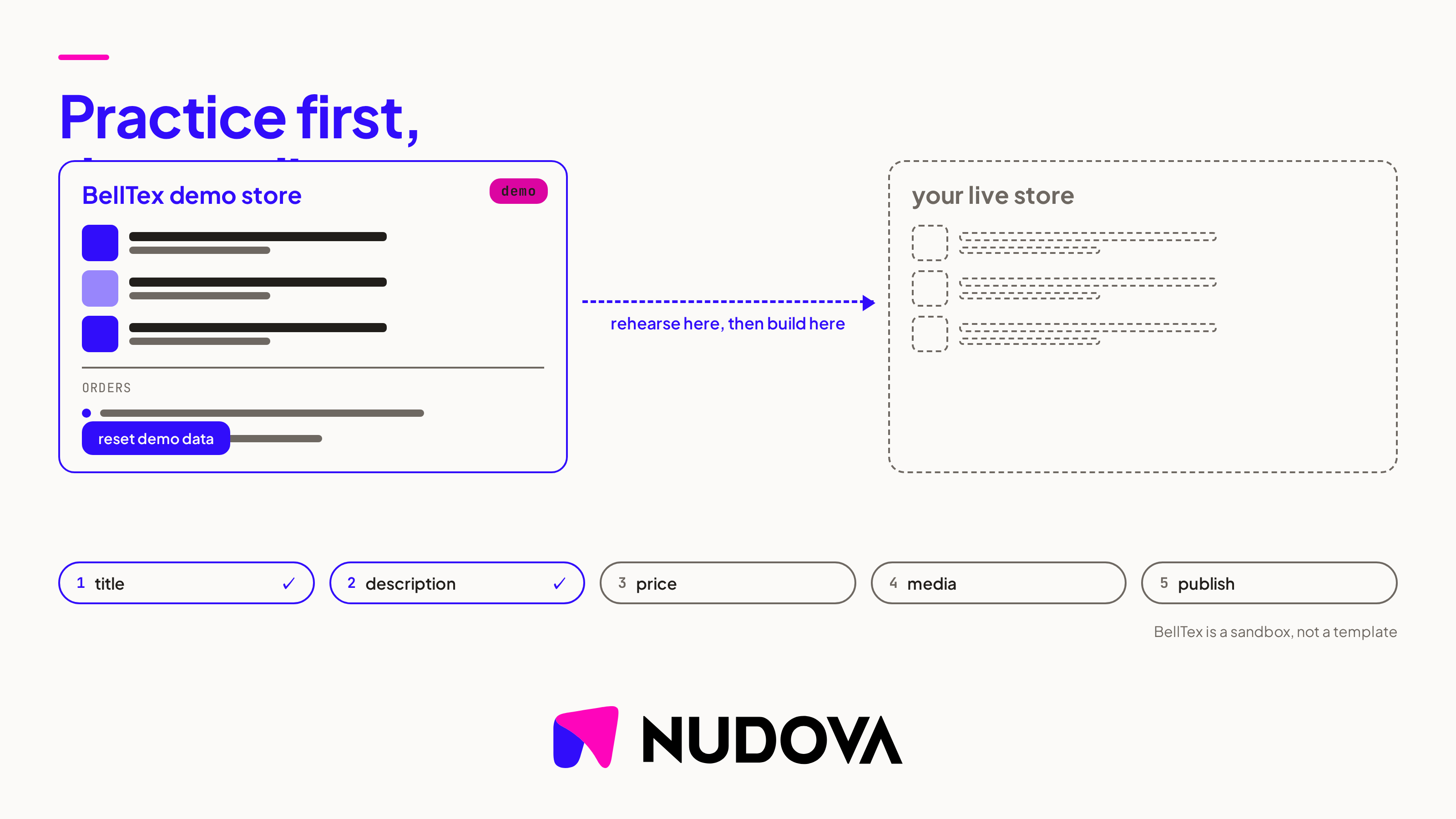
Practice first: using the BellTex demo store before you touch your live Nudova store
Before you add a single product to your real store, you can rehearse the whole setup in BellTex, a sample storefront built to be clicked on, edited, and reset. Here is how to use it well.
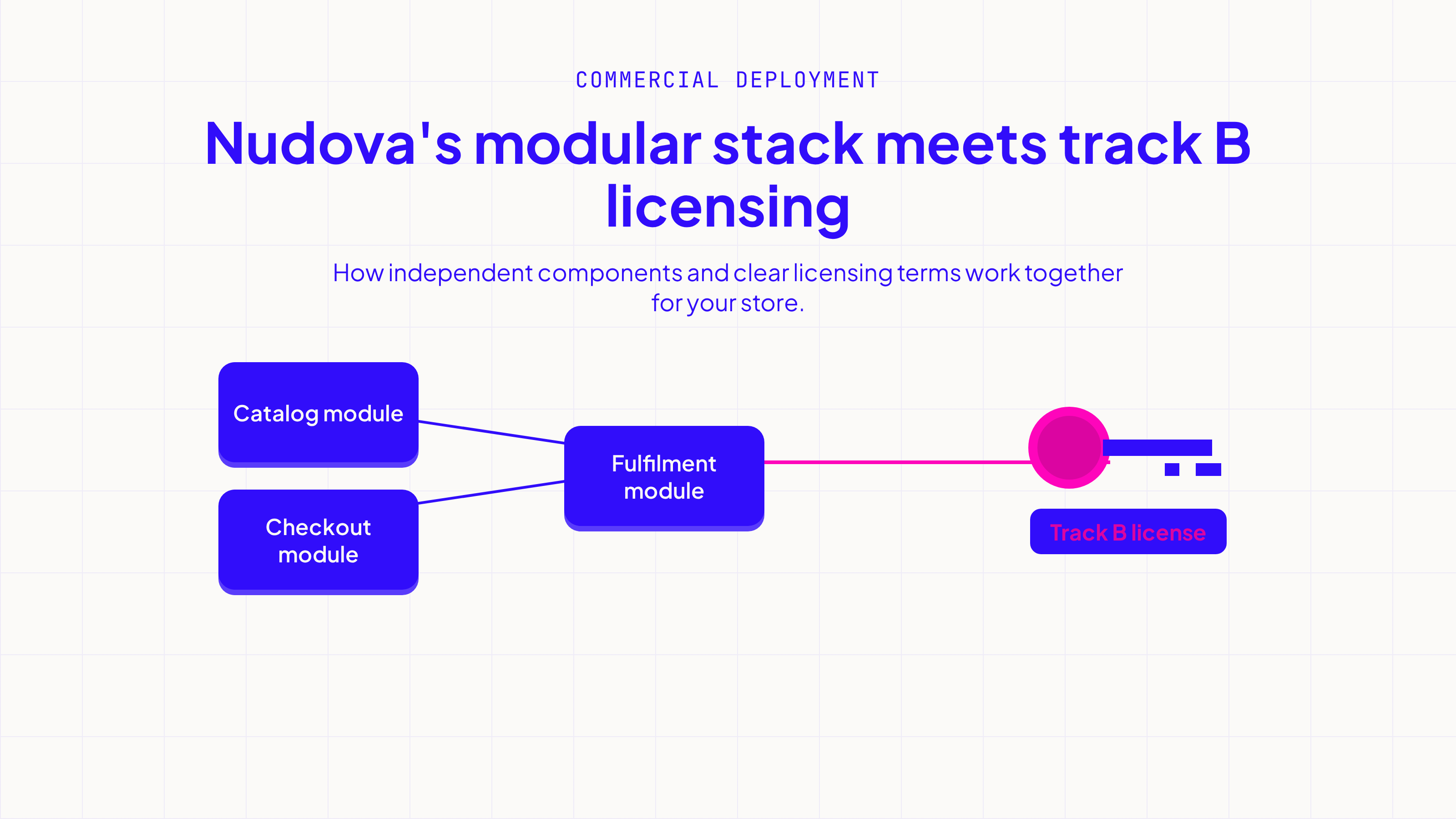
How Nudova's modular stack and Track B licensing work together for commercial deployment
Agencies and engineers evaluating Nudova for client work need to assess the modular architecture and the licensing model as one decision, not two. Here's what's confirmed, what's inferred, and what to ask the vendor before committing budget.
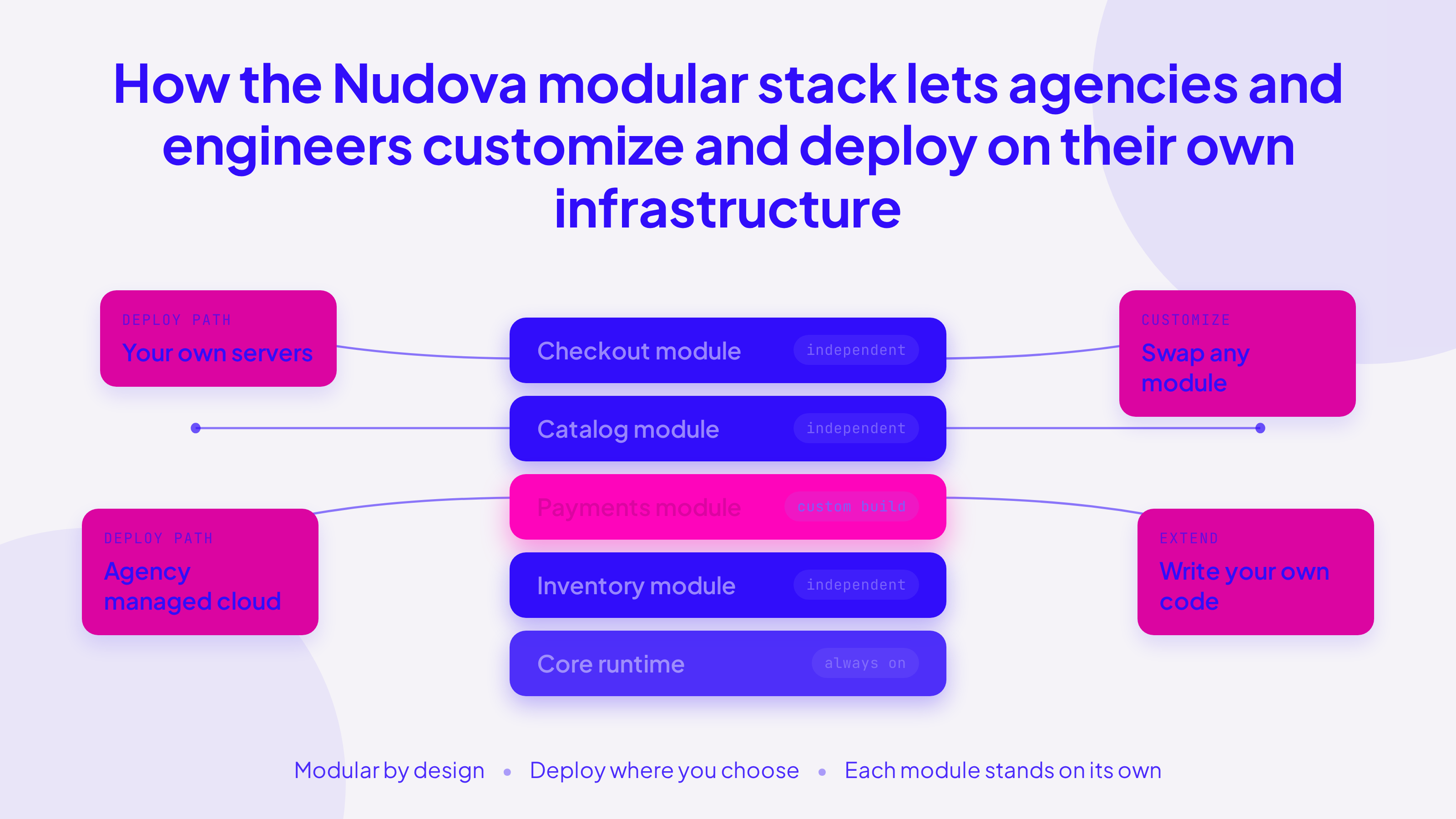
How Nudova's modular stack enables agencies and engineers to customize and deploy on their own infrastructure
A framework for evaluating Nudova's modular domains using established infrastructure-as-code patterns, so agencies and engineers know what to verify before committing VPS budget and engineering time.
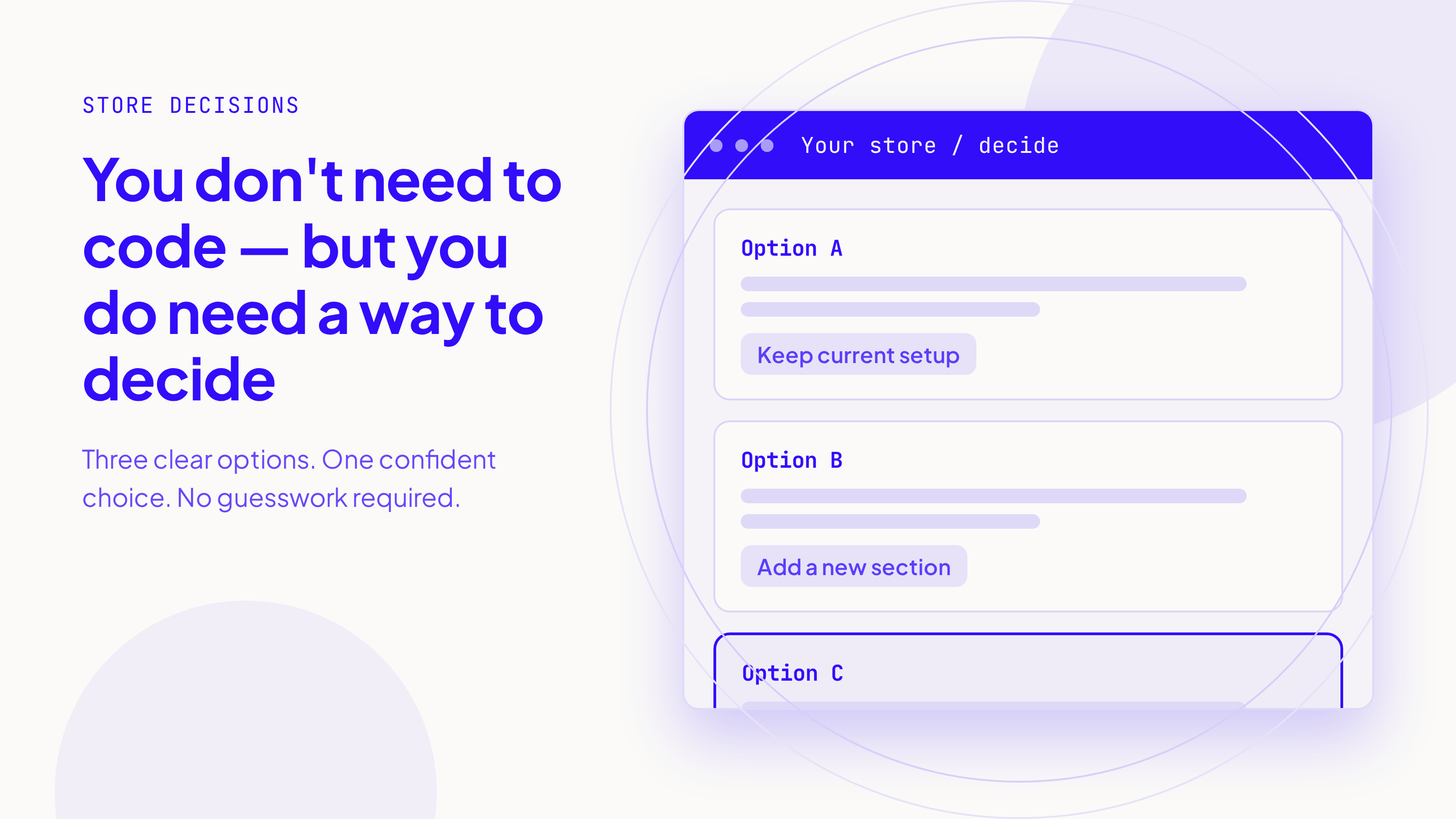
You don't need to code — but you do need a way to decide
Running a store on Nudova without a technical background is normal. What separates confident owners from overwhelmed ones is a repeatable way to decide, not a certificate in programming.
You don't need to be technical to run a real online store
Feeling overwhelmed by an admin dashboard is normal on day one. Here's a mindset-first way to approach Nudova's admin and storefront tools, one task at a time, without needing to code.
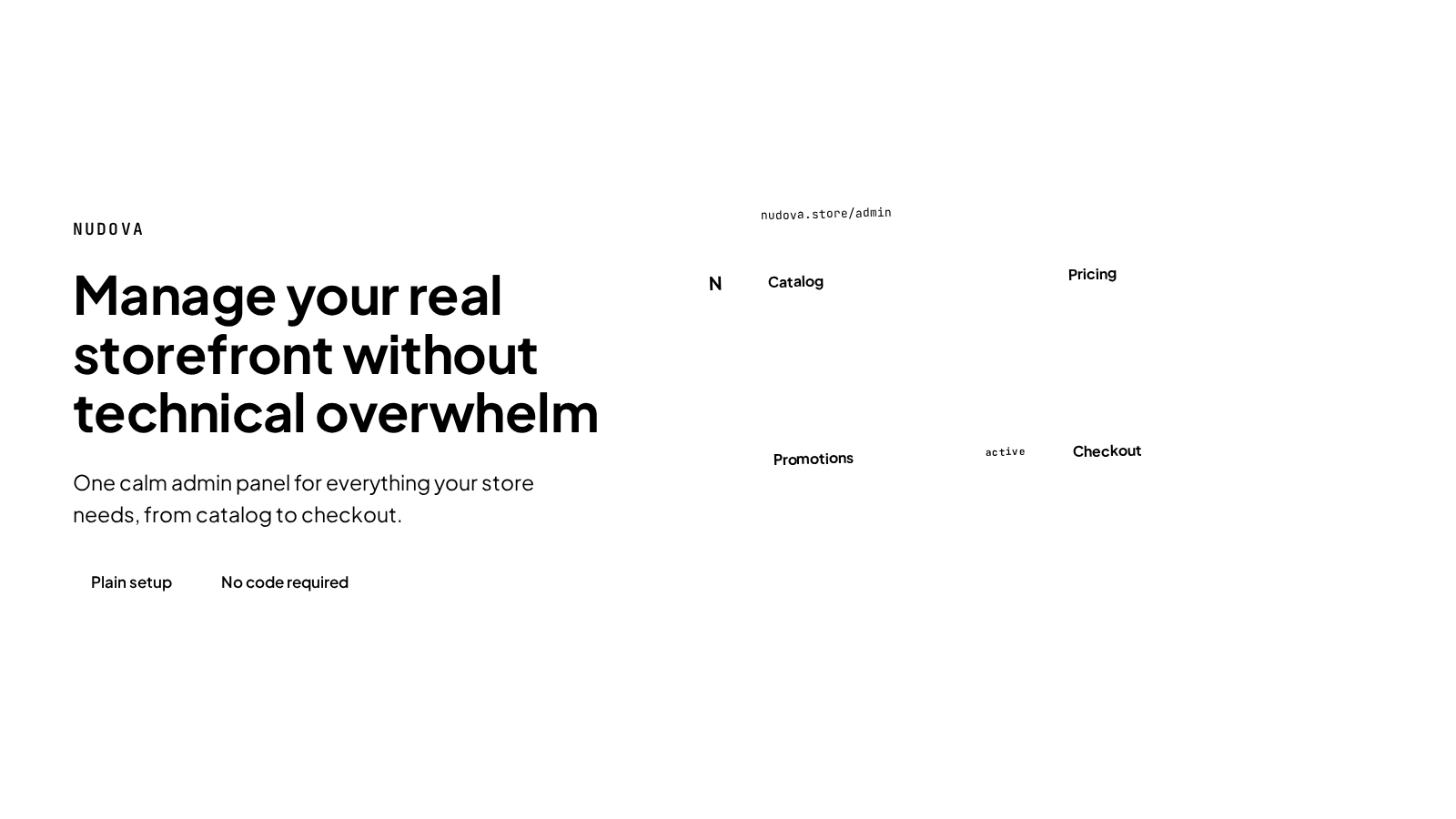
How to use Nudova's modular commerce platform to manage your real storefront without technical overwhelm
A practical look at how Nudova's modular approach to commerce lets store owners run pricing, promotions, and checkout from a dashboard, without hiring a developer or risking the whole system over one change.
OrbStack's commercial licensing and admin requirements for business use in 2026
A straight answer to the licensing, admin, and enterprise-identity questions a business buyer needs before rolling OrbStack out across a macOS team in 2026.
Fin.com's $20M seed round: what it means if you're building your US company from abroad
Fin.com just raised $20 million to rebuild cross-border payment rails, and it runs offices in Dhaka, Bangalore, and Lahore. Here's what the news actually signals for non-US founders, plus a practical walkthrough of forming a US LLC, getting an EIN, and getting paid today.
Plugin4Shell: what it broke, and why plan in Claude, build in Cursor still holds
On September 17, 2026, Air Security disclosed Plugin4Shell, a zero-click RCE that defeats the SHA-pinning checks 4 major AI coding agents rely on. Here is what broke, which vendors have fixed it, and the same-day checklist for auditing your own plugin pins.
Temporal just raised $550M because 'reliable' is the new AI feature nobody talks about
Temporal's $550M Series E at a $12.55B valuation is a funding story on the surface. Underneath it is a warning for every scaling founder: the AI feature that works in your demo can still fail silently for one tenant out of a thousand at 3am, unless you've built the boring plumbing underneath it.
A payments processor just bought a bank. Here's what it means if you run your LLC through Mercury or Wise
TabaPay is acquiring a federally chartered US bank, and Mercury has been moving non-resident LLC customers to a new partner bank. If you run a store through either, the plumbing under your money is changing. Here is what breaks, and how to build so it does not.
OpenAI just cut Cursor off. It's why we never bet on one model
A thread we posted this week, lightly cleaned up. After OpenAI ended model access for Cursor on August 29, the workflow we already run looked less like a preference and more like business continuity. Here is what changed for us, and what did not.
One data center went down and took ChatGPT, Claude, and Grok with it. What's your fallback?
On September 3, 2026, three of the largest AI providers went dark in the same window, and the cause traced back to a single compute site. If your platform calls one provider with no second path, that outage was a preview of your own.
What Stripe's Clerky acquisition means if you're forming a US company from outside the US
On 27 August 2026, Stripe acquired Clerky, the legal-infrastructure platform behind roughly 23% of Silicon Valley seed and pre-seed financings. Here is what the combined Stripe Atlas stack now covers, and the one step it still leaves to you if you are not a US resident.
32% of companies stopped buying software this year, because AI made "build" cheaper than "buy"
A McKinsey survey found that nearly a third of organizations skipped a software purchase because they could build it themselves with AI coding tools. The number is real. What it means for your store, and for the agencies building on Nudova, is more interesting than the headline.
OpenAI just cut Cursor off, and your AI coding stack shouldn't have a single point of failure
On 29 August 2026, OpenAI said it will end Cursor's access to its models after the SpaceX acquisition. Here's how the Nudova team keeps delivery speed independent of any one vendor, and the question founders should ask every dev partner.
Circle's $400M bet on Tazapay is a preview of how international founders will move money in 2027
Circle is buying Singapore-based Tazapay for $400 million in stock to get licensed last-mile payout rails in 100+ markets. Here is what stablecoin rails actually change for a founder outside the US trying to get paid by US customers, and what they still do not change.
OpenAI dropped Cursor over a SpaceX deal. Anthropic filled the gap. Here's why we never blinked.
OpenAI is cutting off Cursor's model access on 12 November. Anthropic is adding Claude compute instead. Here's what the news actually says, what the limit-increase messaging leaves out, and how the plan-in-Claude, build-in-Cursor workflow holds up when vendors fall out.
150 million ID records, one breach: what every multi-tenant SaaS team should take from the IDScan hack
ID-verification company IDScan confirmed a breach affecting more than 150 million driver's license and government-ID records. The number is the interesting part, and it's an architecture question. Here's how tenant isolation, least-privilege access, and encryption-at-rest decide whether an incident stays small.